
About Gardel Trading
Gardel Trading is a proprietary trading firm (prop trading) based in Argentina, specializing in market making and liquidity provision across organized derivatives markets. The firm actively participates in futures, commodities, and financial derivatives, leveraging advanced quantitative models, low-latency technology infrastructure, and disciplined execution.
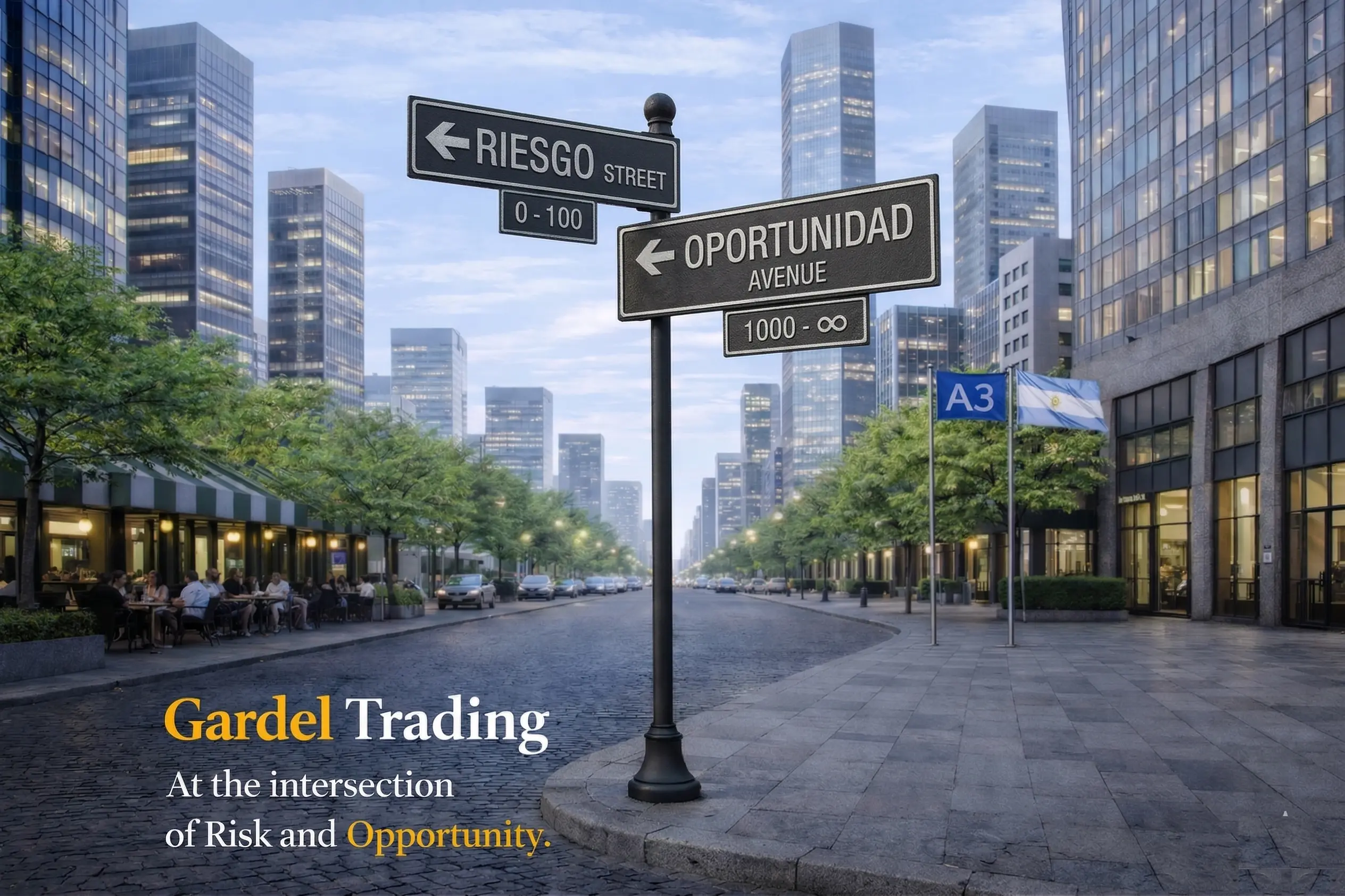
The firm's origins are closely linked to the early development of Argentina's derivatives market. In 2002, Cristian Gardel was among the first two participants to trade a USD/ARS futures contract in the country, positioning himself at the forefront of a then-emerging market. Shortly thereafter, he formalized a market making agreement with ROFEX, contributing directly to the initial growth in liquidity and price formation.
Over the following years, he partnered with the Rosental Group and served as a member of the ROFEX board of directors for more than a decade. This combination of early market participation, institutional involvement, and long-term operational experience has been a defining factor in the firm's development and positioning.
Originally operating under the name Pampa Trading and later as Gardel Trading, the firm has operated continuously through multiple Argentine macroeconomic cycles. Across periods of currency volatility, regulatory changes, and market dislocations, it has maintained operational continuity and consistent market participation, demonstrating resilience under extreme conditions.
Today, the firm maintains active participation in A3 Mercados and focuses primarily on USD/ARS futures, including trading across the curve of ROFEX USD futures contracts. Its activity is centered on systematic strategies designed to provide continuous liquidity and efficient execution in these markets.
Through systematic strategies and algorithmic execution systems, Gardel Trading contributes to efficient price discovery and consistent high-volume execution, with a focus on capital efficiency, controlled drawdowns, and adaptability across market regimes.